01A pilgrimage is more than a sequence of monuments
Some guests want time for personal practice.+
Some guests want time for personal practice. Others travel to understand the history of Buddhist places. The daily programme should respect that difference. Build in quiet visits and realistic transfers instead of filling every afternoon with another stop.
02Choose an arrival city that fits the route
Varanasi is a practical gateway for Sarnath; Gaya supports a Bodh Gaya start; Gorakhpur works for Kushinagar and the approach to Lumbini.+
Varanasi is a practical gateway for Sarnath; Gaya supports a Bodh Gaya start; Gorakhpur works for Kushinagar and the approach to Lumbini. A route ending in a different city can reduce backtracking, but flights and one-way vehicle costs need separate confirmation.
03Two private route proposals
Our eight-day route concentrates on the four principal pilgrimage places.+
Our eight-day route concentrates on the four principal pilgrimage places. The twelve-day proposal adds Rajgir, Nalanda and Shravasti with more time between bases. These are custom itinerary proposals, not scheduled guaranteed departures. Hotel names, guide language, transport and the price are confirmed in a written quotation.
04For international visitors
Entry permissions for India and Nepal depend on nationality.+
Entry permissions for India and Nepal depend on nationality. Verify that the planned land border accepts the required visa route, and that your Indian visa permits another entry if you return from Nepal. Indian-citizen visa exemptions must never be applied to all travellers.
Share the group’s nationality, arrival and departure airports, desired guide language, hotel standard and dietary requirements. Request a USD quotation if useful; currency, taxes, conversion basis and payment terms will be stated in the proposal. Flights, hotels and specialist guides are subject to availability.
05A useful brief for an international pilgrimage group
Share nationalities, arrival airport, language preference and the purpose of the journey.+
Share nationalities, arrival airport, language preference and the purpose of the journey.
A devotional pilgrimage, a study tour and a first introduction to Buddhist heritage use their time differently. Tell the desk whether your group values time for personal practice, historical interpretation or a balance of both. Guide language, specialist knowledge and any monastery visit requests need explicit confirmation.
For a route entering both India and Nepal, document planning must cover each country and any later re-entry. Do not assume one traveller’s requirements apply to the whole group. Confirm international flights only after the route, border crossing and entry sequence have been reviewed against current official guidance.
Private ceremonies, monastery accommodation and meetings with religious teachers are not included merely because a route visits sacred sites. If these are important, request them separately and wait for written confirmation. Plan quiet time respectfully around each site’s own operating rules.
06Choose the pilgrimage first, then the arrival airport
The four principal pilgrimage places span India and Nepal.+
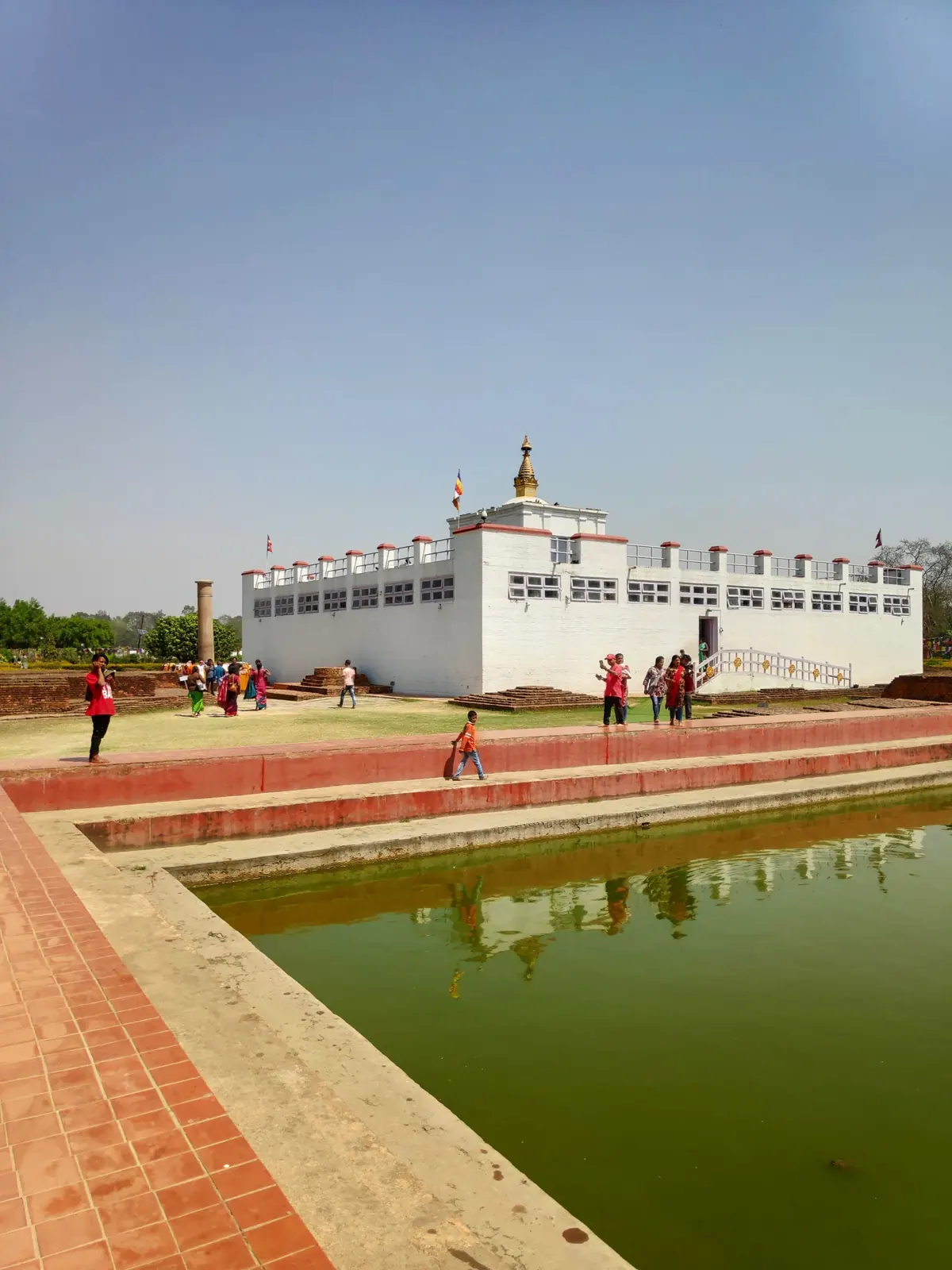
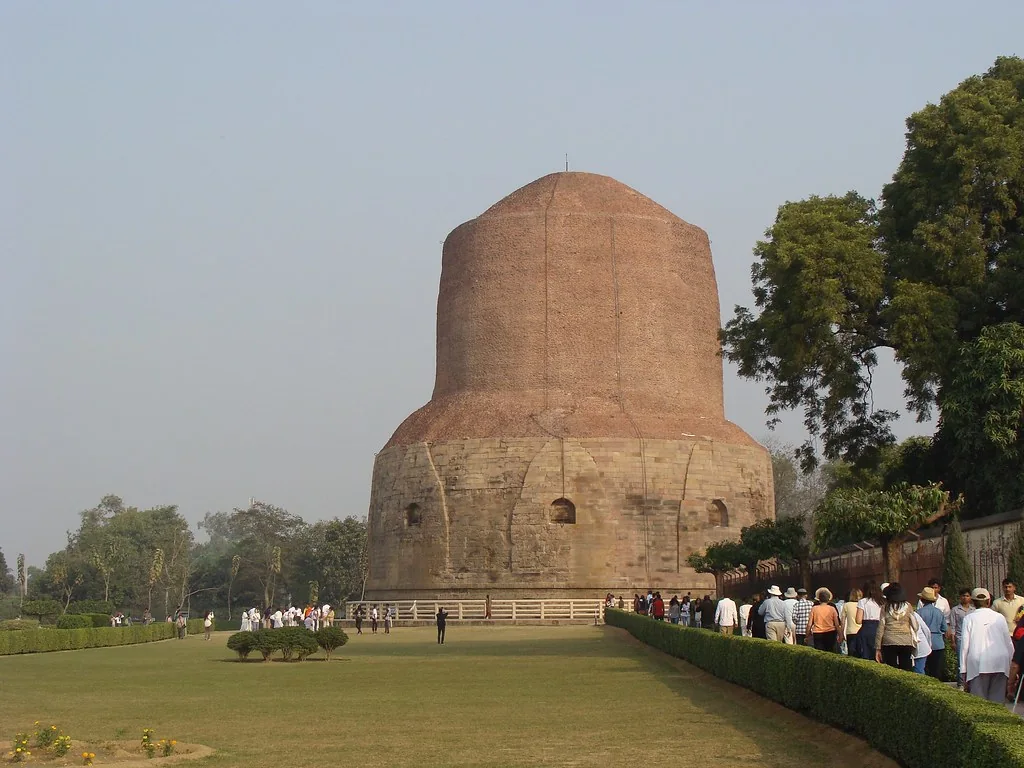
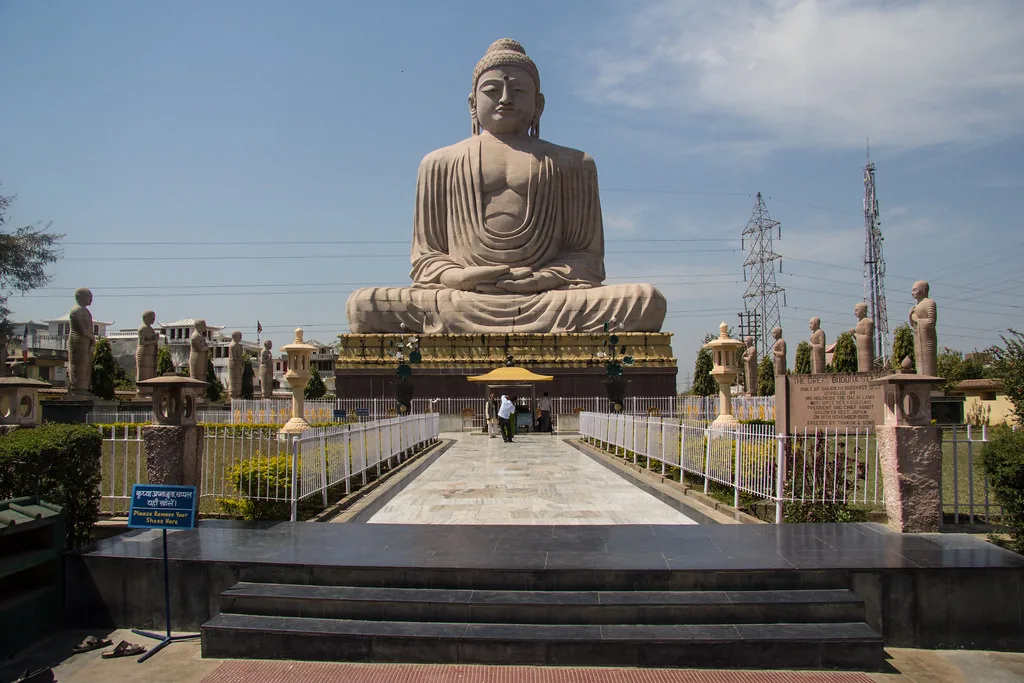
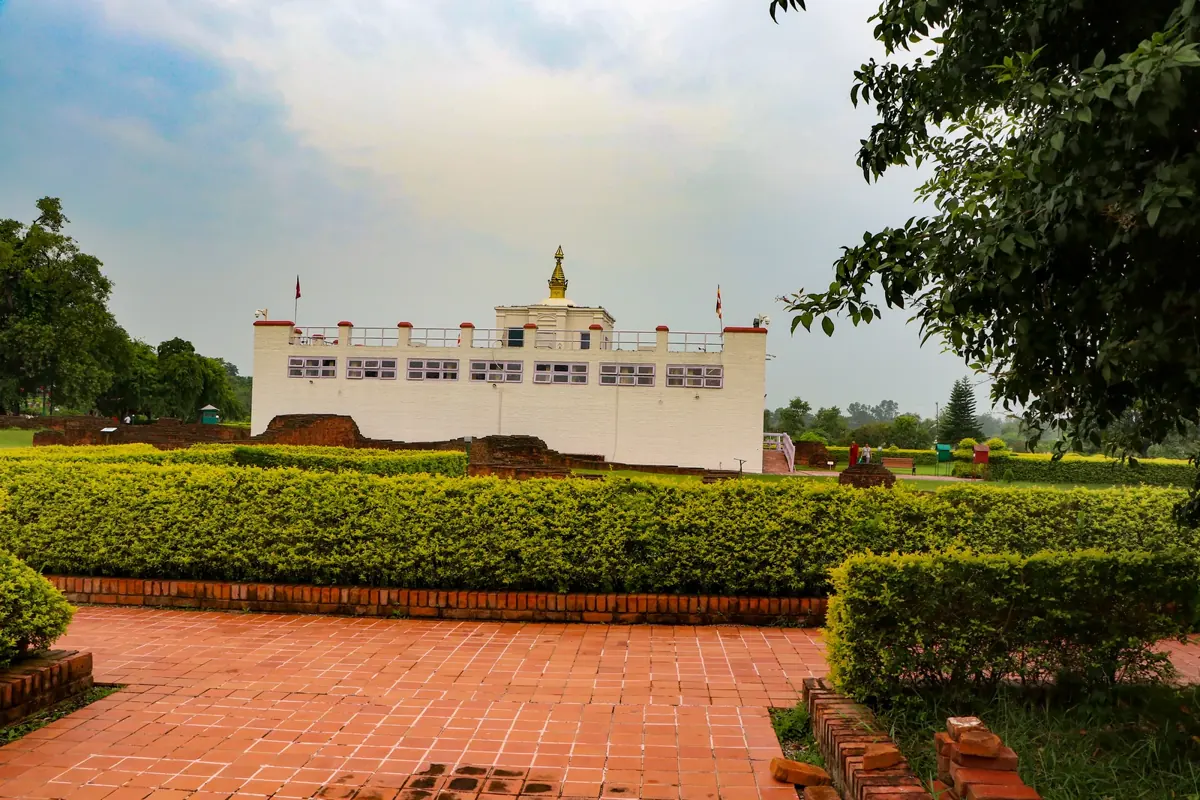
The four principal pilgrimage places span India and Nepal. A route including Bodh Gaya, Sarnath, Kushinagar and Lumbini should therefore be planned as a connected land journey rather than a set of unrelated hotel nights. Decide whether the whole group needs all four places, which country you enter first and where the trip should end before purchasing flights.
The eight-day proposal concentrates on those principal sites. The twelve-day version adds Rajgir, Nalanda and Shravasti with more touring time. Both are private route proposals, not seat-in-coach departures. A short Sarnath–Bodh Gaya tour is an India-only alternative, while the Kushinagar–Lumbini–Shravasti itinerary serves a different regional journey through Gorakhpur.
07A pilgrimage needs time that an ordinary sightseeing list can miss
A group may want quiet time, recitation, historical interpretation or a mix of these.+
A group may want quiet time, recitation, historical interpretation or a mix of these. Tell the desk which matters most. A list of monastery names cannot tell us how long you want to remain at one place or whether your group would prefer an early visit to an additional afternoon stop.
Visits follow the rules of each religious site. A private tour does not mean private access to a temple, a reserved prayer space or an arranged meeting with a religious teacher. If these are essential, request them separately and wait for specific confirmation. Language-speaking guides and accompanying religious leaders are also separate arrangements unless the accepted quotation names them.
08Hotel and meal planning for international groups
Rooming details are particularly important when a group includes singles, couples and people who prefer a twin bed.+
Rooming details are particularly important when a group includes singles, couples and people who prefer a twin bed. Send a rooming requirement rather than only the total passenger count. The hotel category, lift requirement and accessibility needs should be discussed before the final hotel proposal is accepted.
Meal preferences need practical detail: vegetarian food, Jain requirements, allergies, early breakfasts or a different dinner time. Availability should be checked at each overnight stop. Do not infer that a religious itinerary automatically includes a particular diet. The confirmed programme should list the meal count and agreed arrangements.
09Compare international Buddhist tour prices on the same basis
Our USD figures are indicative land-package budgets with the stated adult group size and room-sharing basis.+
Our USD figures are indicative land-package budgets with the stated adult group size and room-sharing basis. They are not international airfares, guaranteed seasonal rates or a promise that every guide, entrance and visa is included. Request a dated quotation in the currency you intend to pay.
The final proposal should specify arrival and departure transfers, hotel nights, meals, road transport, guiding language and service days. Check entry tickets, bank charges, taxes, flight arrangements and optional extensions separately. A lower price with fewer nights or no language guide may not meet the same pilgrimage requirement.
10India–Nepal crossing and the next step
The international circuit includes a land-border segment.+
The international circuit includes a land-border segment. Each guest must establish their own entry eligibility for both countries and, where the route returns to India, re-entry. Nationality, visa type and the intended crossing matter. Consult the relevant official authorities before buying non-refundable services.
Send the travel month, number of guests, preferred language, room requirements and must-visit places to begin. We can then discuss the order of visits and the proposed nights before requesting a full hotel and transport quotation. These details are more useful than choosing an airport simply because its flight is cheapest.
11Build a pilgrimage around time at the sites
The four principal places—Lumbini, Bodh Gaya, Sarnath and Kushinagar—form a meaningful core.+
The four principal places—Lumbini, Bodh Gaya, Sarnath and Kushinagar—form a meaningful core. Their significance does not make them geographically close. A route needs separate transfer days and realistic visiting windows. An eight-day land programme is a focused proposal, while twelve days allows Rajgir, Nalanda and Shravasti to receive deliberate attention. Choose the route after deciding the arrival and departure airports, not before.
For a community or monastery group, explain how much time should remain for prayer, reflection and teaching. A standard sightseeing guide may not provide the religious interpretation your group expects. Confirm the guide’s language, experience, days of service and whether your own teacher is travelling. Keep enough flexibility for site rules and ceremonies without promising private access or reserved sacred spaces.
12Indian travellers: the Nepal segment is still a border crossing
Indian nationality changes Nepal visa requirements, but it does not remove the need for acceptable identity documents or the vehicle’s border arrangements.+
Indian nationality changes Nepal visa requirements, but it does not remove the need for acceptable identity documents or the vehicle’s border arrangements. Check current official advice for every traveller, particularly children and anyone whose booking name differs from their document. Keep originals accessible instead of packing them in luggage that cannot be reached at the border.
An India-only pilgrimage ending at Kushinagar is a different product from an India–Nepal route including Lumbini. If some members cannot cross the border, decide the route before paying for hotels and transport. Never assume a group leader’s documents cover everyone. Religious purpose does not automatically provide an exemption from normal entry requirements.
13International travellers: validate every entry and re-entry
Foreign visitors need advice based on passport nationality, Indian visa type, Nepal visa eligibility and the exact crossing.+
Foreign visitors need advice based on passport nationality, Indian visa type, Nepal visa eligibility and the exact crossing. Being resident in India is not the same as being an Indian citizen. A route that leaves India for Lumbini and then returns creates a second Indian entry question. Confirm the proposed land entry directly against current immigration rules before accepting the itinerary.
India’s eVisa entry conditions do not provide a general permission to enter from Nepal at any land border. Do not book a Sonauli return on that assumption. The suitable solution may be a different visa, a permitted air arrival or a route ending in Nepal, depending on the traveller. Trishna should receive confirmation of the workable route before non-refundable services are committed; the website cannot decide visa eligibility for an individual.
14Season, hotels, food and group comfort
The north Indian plains can feel very different from Kathmandu or a Nepal mountain itinerary.+
The north Indian plains can feel very different from Kathmandu or a Nepal mountain itinerary. Consider heat, fog, visibility, walking and the group’s meal routine when choosing dates. Plan major outdoor visits at sensible times and allow for rest. For older travellers, room location, lifts, walking distances and bathroom arrangements may matter more than an attractive lobby photograph.
Ask for the meal plan in plain language: breakfast only, breakfast and dinner, or a fuller board arrangement. Specify vegetarian and other dietary requirements in advance. The hotel category, rooming list and guide language should be confirmed in writing. Do not advertise international-standard luxury merely because the quotation is in USD; comfort depends on the actual booked services.
15Reading a USD pilgrimage quotation
A USD per-person rate must identify the number of paying guests and the room-sharing basis.+
A USD per-person rate must identify the number of paying guests and the room-sharing basis. Two travellers with a private vehicle and a guide have a different cost structure from a twenty-person group. Compare hotel nights, meals, guide services, entrance charges, local transfers and border arrangements. Flights, visas, tips, donations, insurance and extensions should be explicitly included or excluded.
Ask who handles late flights, split arrivals and an extra hotel night. Group leaders should confirm the rooming list before supplier deadlines and understand how a smaller final group changes the price. Do not collect participant payments against a preliminary website budget. The accepted quotation, payment milestones and cancellation schedule form the commercial agreement.
16A more thoughtful circuit: culture, conduct and time beyond the checklist
Bodh Gaya needs time for the Mahabodhi area rather than a brief stop between two drives.+
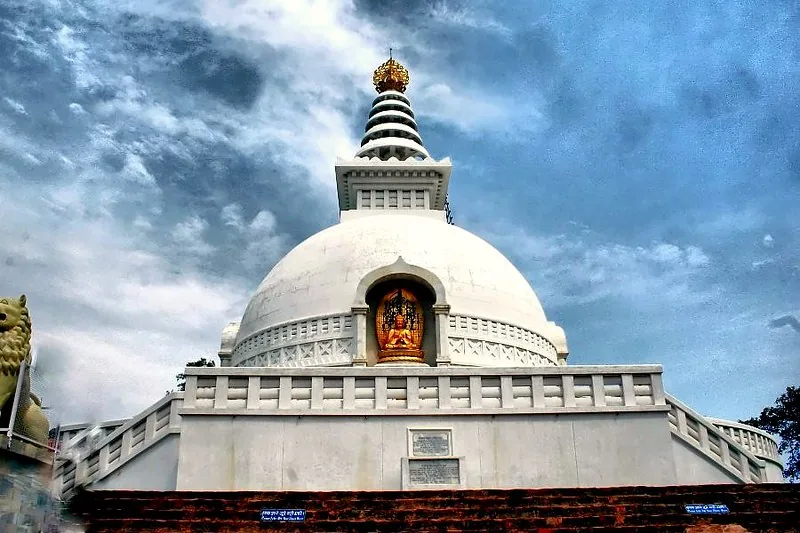
Bodh Gaya needs time for the Mahabodhi area rather than a brief stop between two drives. Sarnath connects the journey with the first teaching; Kushinagar with the Buddha’s final passing; Lumbini with his birthplace. Rajgir and Nalanda add historical and intellectual context. These are distinct experiences, not interchangeable boxes on a checklist.
Ask before photographing worshippers, keep voices considerate and follow the rules of each temple or monastery. A guided visit can explain architecture and history without disrupting religious practice. Shopping stops and performances should not crowd out the purpose of the pilgrimage. If the group wants additional cultural visits, place them in the itinerary openly rather than treating them as compulsory diversions.
17Planning with a group leader, monastery or overseas organiser
Send the proposed group size, nationalities, preferred guide language, religious priorities and arrival pattern together.+
Send the proposed group size, nationalities, preferred guide language, religious priorities and arrival pattern together. A single group name does not tell the operator whether everyone arrives on the same flight or follows the same meal routine. Agree who can approve hotel substitutions and daily changes, how participants receive the final programme and which contact handles questions during the journey. If your own teacher accompanies the group, explain their role before adding a local guide.
Allocate specific time for prayer or teaching without describing it as exclusive access to a sacred site. Quiet time and guided interpretation can sit alongside one another when the timetable makes space for both. Ask whether a guide remains with the group across the full circuit or joins at individual destinations. Confirm language provision directly; an English-speaking driver should not be described as a specialist pilgrimage guide unless that is the service actually contracted.
18Four sacred places or an extended Buddhist circuit?
A focused pilgrimage should protect the principal visits rather than use every spare hour for another city.+
A focused pilgrimage should protect the principal visits rather than use every spare hour for another city. The extended route adds nights and context, but also more transitions. Read the plan from the perspective of the traveller: where will luggage move, which days are mainly transport, and when is there time to absorb the visit? If the group wants substantial religious practice at each stop, a standard sightseeing timetable should be revised.
A useful enquiry names the non-negotiable sites, the maximum days available and the preferred start and finish airports. The desk can then explain what fits and what must be omitted. Removing a destination may produce a more coherent pilgrimage than compressing every visit. An extension should describe its extra nights, services and cost separately so the group leader can approve it without losing sight of the core programme.
19Daily comfort and service continuity on an international pilgrimage
Request hotel rooming, meal arrangements, bottled-water provision if required, luggage handling and local guide coverage as distinct items.+
Request hotel rooming, meal arrangements, bottled-water provision if required, luggage handling and local guide coverage as distinct items. Avoid choosing an international package only from a USD price and a vehicle photograph. For a mixed-nationality group, the document checks and border process can differ between participants even when the route is identical. Give the operating team sufficient time to assess the actual travelling party before committing to non-refundable arrangements.
Clarify who accompanies the group at each transfer and who handles a missed connection. If the itinerary changes vehicle or local guide, ask how luggage, meeting points and contacts are handed over. A premium service should be defined by reliable, agreed arrangements rather than decorative language. Confirm accessibility requests property by property, and do not substitute a hotel category for evidence that a particular guest can comfortably use the room and facilities.
20Your pilgrimage brief: what to send first
Share the group’s preferred language, principal pilgrimage sites, available dates and arrival country.+
Share the group’s preferred language, principal pilgrimage sites, available dates and arrival country. Mention whether you want a teacher-led programme, historical interpretation or a combination. The travel desk needs those distinctions to discuss a suitable route and guide arrangement. An initial enquiry should describe your needs without attaching passports or sensitive document numbers. Once a workable programme is agreed, the necessary booking documents can be handled through the process confirmed for your group.